
Appetite for Failure: The Hidden Fuel for Cultural Growth
- Sharon Nijhawan

- Jun 30, 2025
- 2 min read
“The Fastest Way to Succeed is to Double your Failure Rate….”
-Thomas J. Watson
In the modern business landscape, the word "failure" often triggers anxiety, risk-aversion, and even shame. But what if we've been looking at it all wrong? What if, instead of being a roadblock, failure is actually the engine that powers cultural growth, innovation, and long-term success?
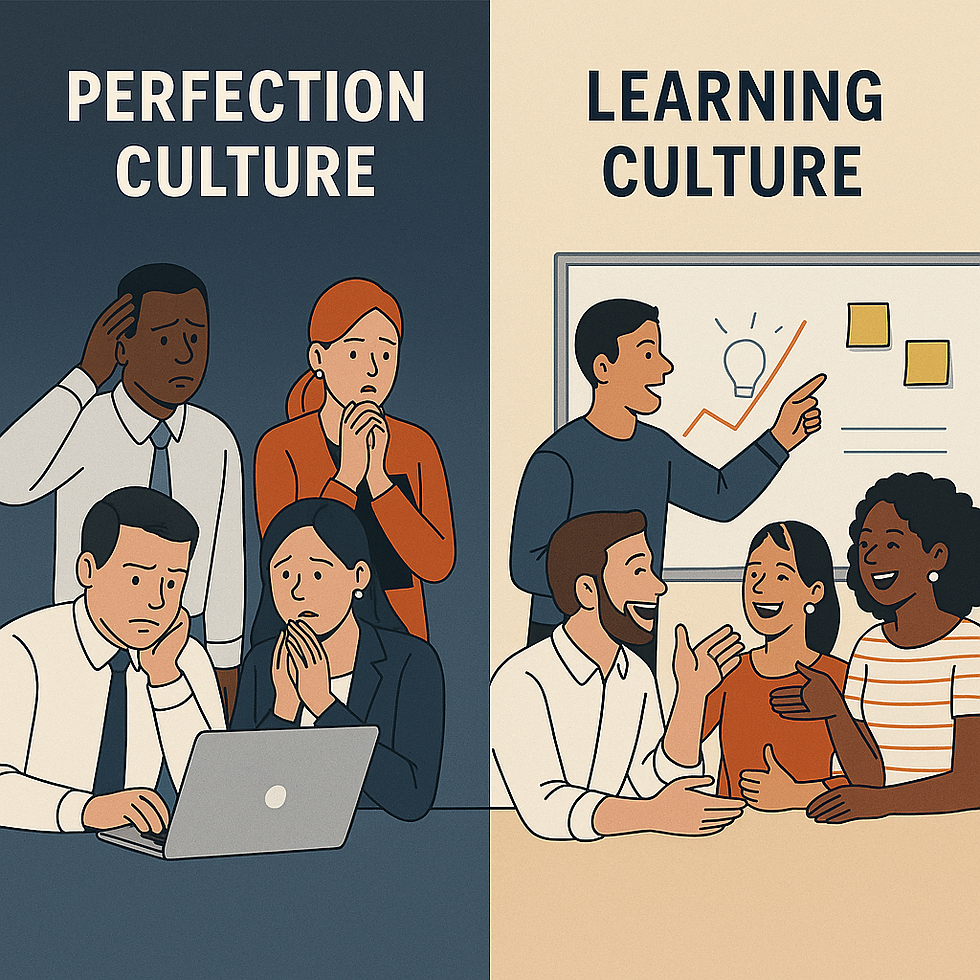
Organizations that foster an appetite for failure aren't reckless. They are intentional. They create safe environments where mistakes become rich learning opportunities, not sources of fear. They shift the narrative from "who's to blame?" to "what can we learn?"
Why Failure Matters in Culture Building
1. Psychological Safety Fuels Experimentation
Amy Edmondson's pioneering research on psychological safety shows that employees who feel safe to take risks without fear of humiliation or punishment are far more innovative and engaged. Google’s famous Project Aristotle found psychological safety to be the #1 factor behind high-performing teams.
2. Innovation Demands Tolerance for Failure
According to a BCG survey, 42% of executives say risk-averse culture is one of the biggest barriers to innovation. If employees are terrified of failure, true experimentation never happens. Companies like Amazon and Google have embedded "failure-tolerance" into their DNA, recognizing that big bets sometimes fail — but that's where breakthrough ideas are born.
3. Resilience Over Perfection
A study by the American Psychological Association found that teams who process failure constructively are more resilient, adaptable, and better at solving future challenges. Perfectionism, on the other hand, can lead to burnout and stagnation.
Failure as a Leadership Competency
Leaders play a pivotal role in shaping failure culture. When leaders openly discuss their own failures, they humanize vulnerability and set the tone for their teams. Leaders who reward experimentation — even when outcomes don’t always work — create trust and psychological safety.
· Transparent Leadership : Share setbacks and lessons learned publicly.
· Fail-Fast Culture : Encourage small, quick experiments with rapid learning cycles.
· Post-Mortems Without Blame : Create rituals to analyze failures as group learning exercises.
The Cost of Avoiding Failure
· Lost Innovation : Companies that play it safe often miss emerging trends.
· Burnout : Fear of failure increases anxiety and stress among employees.
· Stifled Engagement : Employees who feel they can't take risks often disengage and withhold their best ideas.

In contrast, organizations that embrace failure drive higher engagement, creativity, and resilience.
Final Thoughts
Failure isn’t the opposite of success. It's the companion of progress.
In a world obsessed with perfection, organizations that embrace failure as a cultural asset unlock untapped potential in their people. They create brave, resilient, and innovative teams ready to tackle whatever the future brings.
The question for leaders isn’t: "How do we avoid failure?"
It's: "How do we fail better, learn faster, and grow stronger?"
#Leadership #OrganizationalCulture #FailureIsLearning #GrowthMindset #PsychologicalSafety #Innovation #PeopleFirst #CultureMatters #LeadershipDevelopment #FutureOfWork #CourageousLeadership #FailFast #LearningCulture #HRTrends


Comments